
About the Neighborhood Council
The Lex-Ham Community Council works to enhance the quality of life and foster positive change in the Lexington-Hamline neighborhood by engaging residents in meaningful projects, programs, and direct actions that address the community’s needs and aspirations.
We envision a vibrant, inclusive, and connected Lexington-Hamline neighborhood where residents collaborate to create a thriving community, celebrate diversity, and address challenges together with innovation and resilience.
The following history was compiled and presented to the Lex-Ham community in June 2003 by Karl Grahek, a longtime Lex-Ham resident.
As you know, good, healthy gardens don’t just happen. They are planned, weeded, nurtured and cultivated. Good, healthy neighborhoods don’t just happen either. They are planned, nurtured, safeguarded, and beautified. Our neighborhood — Lexington-Hamline — has been very well tended to by our community council over the past several decades.
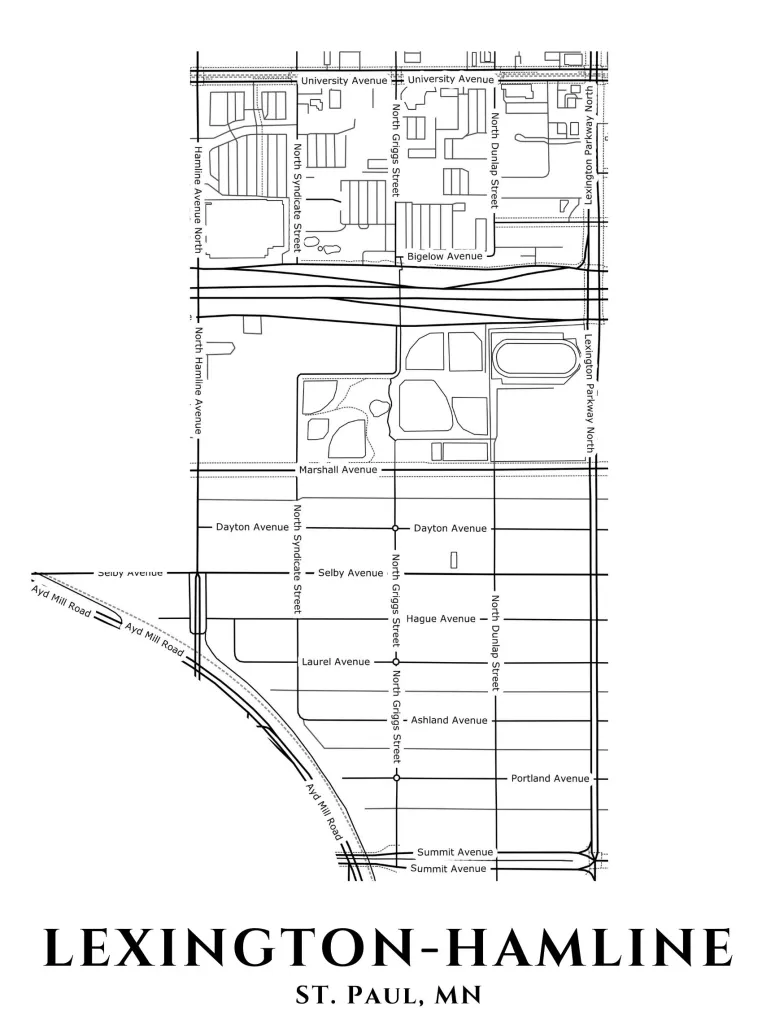
Over 30 years ago, the residents of this neighborhood joined together to form the LHCC. They defined the boundaries of the area they wished to organize, gave the area a name, “Lexington-Hamline,” and incorporated a tax-exempt, non-profit organization to manage and carry out the goals and objectives put forth by the residents.
Over the years, the LHCC met with many successes. To mention a few:
The council has worked on transportation issues such as the Selby Avenue Bridge, Ayd Mill Road, installation of a stop light at Griggs and Marshall, safer pedestrian crossings on Lexington Parkway and supported the installation of stop signs on residential streets throughout our neighborhood.
The very first project that the council undertook was to create the Hague-Schuneman Tot Lot. This parcel of land was owned by the city and stood vacant except during the winter when it was utilized as a dumping ground for snow that had been removed from city streets. After much work and negotiation the Hague-Schuneman Tot Lot became a reality.
Other avenues of success were the Energy Conservation Project, publishing a monthly newsletter, the Eavesdropper, formation of a low income housing project, a youth recreation program, and spin offs such as the Youth Express, the Lex Ham Garden Club, the LexHam Community Theater and Band and the Farm in the City.
All of us who are residents of this community have indeed reaped the benefits of the work of our community council in those many ways which were mentioned earlier. Now we are faced with another crisis in funding as are so many other organizations and it behooves us to dig deep to help in what ever ways we can to enable the LHCC to continue its mission to ensure the quality of life in our community that we now enjoy.